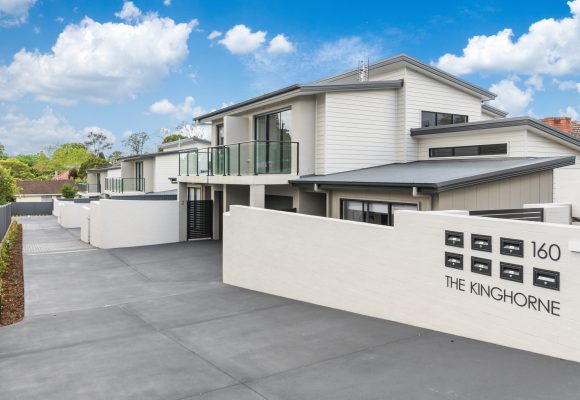
Homes designed to support independence and quality of life
Specialist disability accommodation (SDA) is housing designed for people with disabilities who have high or complex support needs.
These homes include accessible design features that support everyday living, promote independence, and make it easier for supports to be delivered safely and effectively.
Home in Place is an experienced, not-for-profit SDA provider, working with NDIS participants, families, support coordinators, SIL providers, and SDA owners to deliver high-quality homes across Australia.
We manage hundreds of modern, purpose-built SDA homes across New South Wales, Queensland and Victoria, including metropolitan and regional locations such as Sydney, Newcastle, Brisbane and Melbourne. Participants can choose from individual or shared homes, as well as apartments, depending on their needs and preferences.
We also work with developers and investors to deliver new SDA housing for NDIS participants approved for SDA funding, supporting long-term, sustainable housing outcomes.
Our team works closely with Supported Independent Living providers and other partners to ensure tenants feel safe, supported and settled, with a strong focus on independence and quality of life.
Home in Place is a registered SDA provider with the National Disability Insurance Scheme (NDIS) and a member of the SDA Alliance. We are registered to deliver SDA across NSW, Queensland, Victoria, the ACT, Northern Territory, South Australia and Tasmania.
In our two most recent NDIS Quality and Safeguards Commission audits, Home in Place met all requirements of the SDA Module and received a recommendation for the highest rating of Level 3 Best Practice in NDIS Tenancy Management.
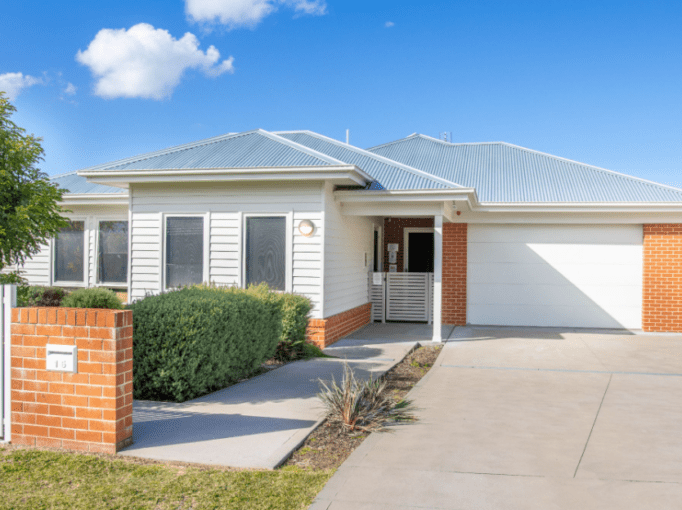
SDA Vacancies
Home In Place has vacancies in a range of Specialist Disability Accommodation dwellings in NSW, Queensland and Victoria. We are constantly adding SDA properties to our portfolio so check below to see if we have a property that suits your needs. Alternatively, talk to us about building your own SDA housing.

NDIS information for SDA applicants
Learn how SDA funding works, who may be eligible, and what’s involved in applying.

SDA provider and SIL partnerships
Information for SIL providers interested in partnering with Home in Place, including expressions of interest.
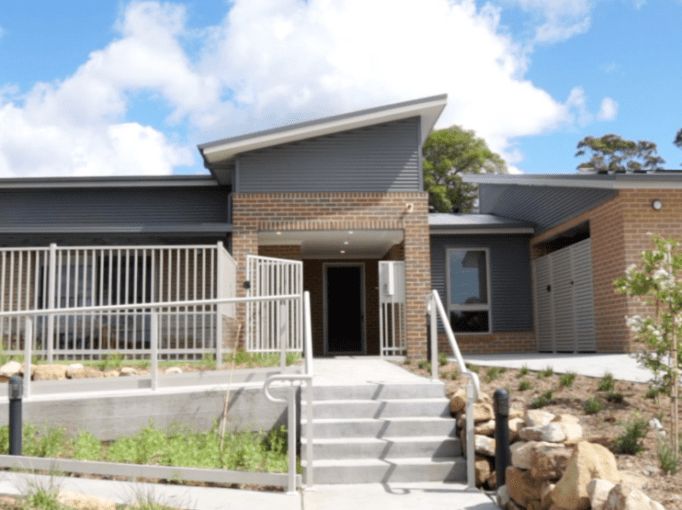
Tenancy and property management services
Information for SDA owners, developers, and investors about tenancy and property management services.
What is SDA?
SDA refers to the physical home where a person lives. It is separate from support services and is designed to meet specific accessibility and safety requirements.
SDA funding helps cover the cost of the specialist housing itself. Daily supports are typically delivered through Supported Independent Living (SIL) or other support arrangements.
Understanding SDA funding
In keeping with the NDIS principles of choice and control, SDA funding is provided directly to the person with disability as part of the Capital Supports in their NDIS plan. This funding can then be used, along with other supports, to rent an SDA home, apartment or a room in a shared household from an NDIS-registered SDA provider. All SDA housing must meet SDA design standards and be registered with the National Disability Insurance Agency (NDIA).
SDA is usually considered during a plan review, and you do not need to have a specific SDA home identified in advance to explore eligibility.
Because the process of securing SDA funding can take time, it is helpful to start planning early. The application process is detailed, and many people find it useful to work with an experienced Support Coordinator and Allied Health professional who can guide them through including SDA in an NDIS plan.
SDA Design Categories
-
Disability housing with a focus on physical access for people with sensory, intellectual or cognitive impairments.
-
Housing with a high level of physical access features for people with a disability who have lots of physical challenges
-
Strong and durable disability housing is designed to be a safe place for residents with complex and challenging behaviours, and for other people.
-
Housing that includes a high level of physical access for people with a disability who need very high levels of support.
Frequently Asked Questions
-
To be eligible for SDA housing you must be an NDIS participant with a permanent disability who has very high support needs that require specialised disability housing.
In deciding whether you are eligible, the NDIA uses these initial broad criteria, which it applies to all funding support applications. The SDA support must:- assist a participant to reach their goals and aspirations
- facilitate the participant’s social and economic participation
- represent value for money, relative to benefits achieved and costs of alternative supports
- be good practice and is likely to be beneficial to the participant
- consider what’s reasonable for parents, carers, informal networks and the community to provide
- be most appropriately funded through the NDIS.
The NDIA will ultimately determine if you are eligible based on your specific application.
-
SDA Services have collaborated with the team at Vera Living to create a fantastic online tool to help you access your SDA eligibility.
This tool walks you through a series of questions to get an insight into your individual circumstances, including whether you would be likely to be eligible for SDA.
The tool can be accessed via their website www.sdaservices.com.au/eligibility-tool
-
To be eligible for Supported Independent Living (SIL) funding you must be an NDIS participant with a permanent disability and need high levels of support from people throughout the day, every day, with daily tasks such as personal care and meal preparation.
You may be eligible for SIL funding but not SDA funding.
-
Home in Place partners with a range of Supported Independent Living (SIL) providers. These are separate and specialist organisations with staff trained to provide personal and other care to people with a disability with complex needs.
In some of our SDA housing complexes and group homes there is an existing SIL provider. In many cases, the person with a disability can choose their own SIL.
-
You can view our SDA vacancies online.
We are constantly adding to our SDA housing options, so please check back or talk to our expert team about your needs. There are developers and investors looking to build housing for eligible NDIS participants with SDA funding in their plan.
The NDIS also lists available rental properties here.
-
To get SDA funding you must be an NDIS participant and apply to the NDIA to have it included under Capital Supports in your NDIS plan.
SDA is usually assessed for inclusion at existing plan reviews. You submit a change of circumstances application. The application process is extensive and you need to be thorough and address every assessment criteria.
You don’t need to have identified a particular house, apartment or group home to test for SDA eligibility. You can get SDA in a plan to be able to use in the future. This is particularly important if the health of the person with the disability, or their parents or carers, starts to deteriorate.
Here are five steps to getting SDA funding into your NDIS plan.
- Get funding and support to explore housing options – a Support Provider and Allied Health worker can be invaluable
- Develop a housing goal
- Develop a life vision
- Assess SDA eligibility
- Submit the SDA summary and evidence (SDA Housing Plan) to the NDIA.
-
The maximum rent contribution you can be charged is 25% of your disability support pension plus 100% of any Commonwealth Rental Assistance you receive. This will usually be significantly less than market rent. The balance of the rent is provided via the NDIS from your SDA housing funding in your plan.
-
No. Your rent doesn’t cover your in-home support (Supported Independent Living) costs for people to provide you with care and support. It also does not cover daily living costs, such as groceries and utility bills.
-
NDIS participants pay to live in specialist disability accommodation rentals. This includes paying rent and for Supported Independent Living (SIL) services and other living costs.
Taxpayers subsidise the cost of SDA via NDIS payments to the person with a disability.
Rent is paid out of SDA funding in a person’s NDIS plan. They may be required to make a “reasonable rent contribution” but this is capped at 25% of their disability support pension, plus any Commonwealth Rental Assistance they receive.
SIL costs are paid out of separate funding pool in a person’s plan.
-
In line with the important NDIS principles of choice and control, SDA payments are paid to the person with a disability under Capital Supports in their NDIS plan.
-
Applying for SDA housing can take time because you need the NDIA to approve SDA in your NDIS plan. The application is extensive and you may have to wait until your annual plan review for the application to be considered.
You don’t have to have a specific SDA dwelling in mind to see if you are eligible. You can get SDA in a plan to use in the future.
Start thinking about SDA and getting assessed for eligibility if
- you are moving, or want to move out of your parents’ home
- your current housing is putting you or your carers at risk
- you are living with aging parents
- you are living in a group home and want to or need to leave
- you are stuck in hospital with no access to appropriate housing
- you are living in residential aged care.
It can take up to 12 months to get SDA into an NDIS Plan so you should start early.
-
The Allied Health Report is a crucial part of an application for SDA housing. It should answer these questions.
- How significant is the impact of a person’s disability on their mobility, self care and self management?
- What supports (other than specialised housing) could help achieve the person’s housing goals?
- What type of housing features, housing size and location, does the person reasonably require to achieve their goals?
It must use recognised assessments and outcome scores that address:
- environmental assessment including risks
- current living situation, including risks
- mobility/motor skills assessment
- self-management and self-care
- informal supports, including any risks
- communication
- social interaction
- community access and engagement
- equipment and assistive technology needs
- a recommendation for SDA.
-
- It highlights the professional qualifications and expertise of the worker who prepared the report
- It outlines the standing and validity of each assessment tool
- It numbers the paragraphs and doesn’t have tables or text boxes to assist the support coordinator with cutting and pasting parts of the report
- It interprets findings with reference to the SDA eligibility criteria set out in Part 3 of the SDA Rules
- It justifies recommendations for supports with reference to Section 34 (reasonable and necessary), of the NDIS Act 2013.
SDA newsletters and updates
Stay informed about new vacancies, sector updates, and SDA developments.
Need help or advice?
Choosing or applying for SDA can take time, and the process can feel complex. Our team is here to help guide participants, families and providers through the options.