
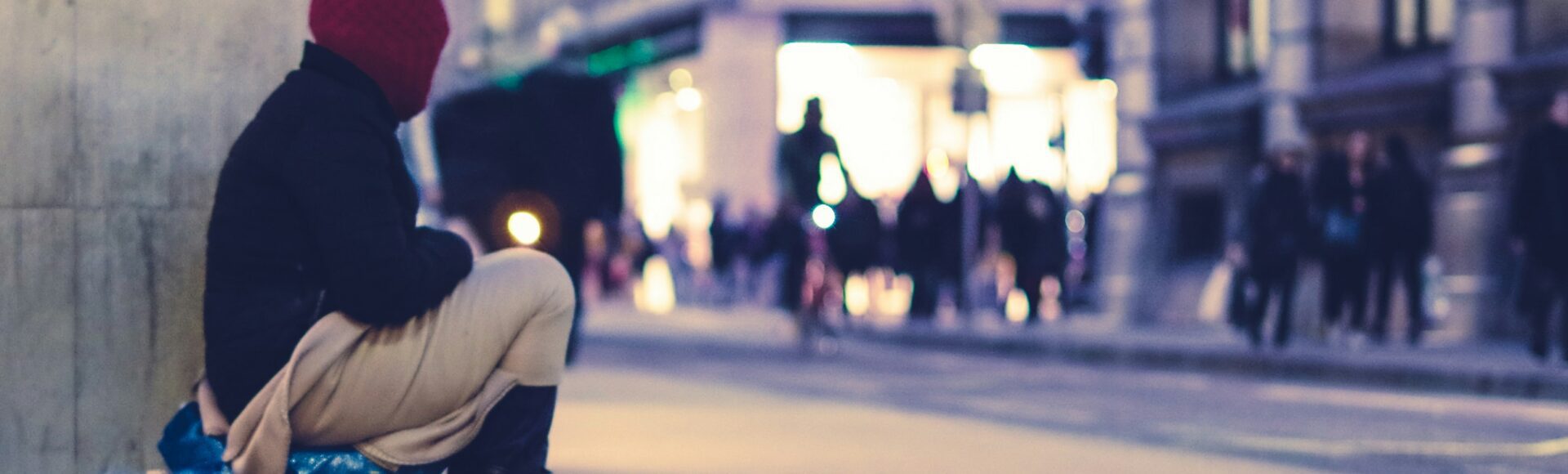
Homelessness doesn’t just mean going without a roof over your head. It reaches into every pillar of a person’s life. From mental health struggles to physical illness, job insecurity to social isolation, the effects of homelessness on individuals and their families can be diverse, damaging, and enduring.
As an affordable, community and temporary housing provider, we see the human cost behind the statistics every day. In this article, we’re taking a closer look at how homelessness affects the people living through it, and why safe and secure housing is about so much more than just shelter.
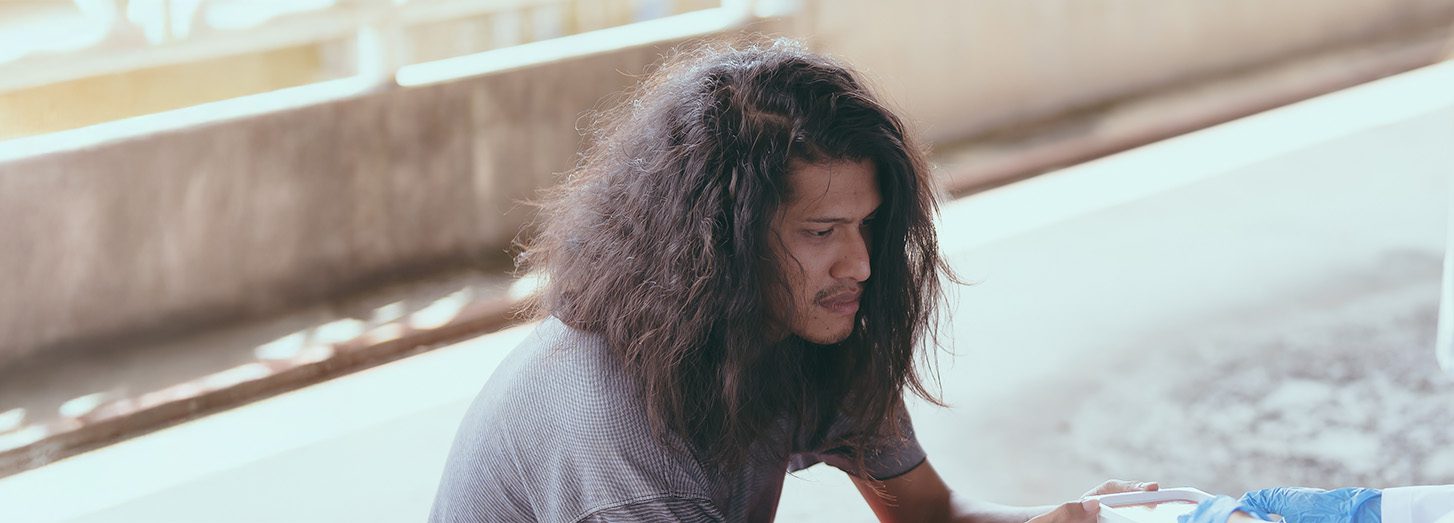
The consequences of experiencing homelessness
Mental health issues
One of the most severe and often unseen effects of homelessness is on mental health.
A lack of adequate housing means living with constant uncertainty. The daily grind of trying to stay safe, find a place to sleep, and avoid harm takes a heavy emotional toll.
Over time, this persistent stress can lead to serious mental health conditions such as anxiety, depression, and post-traumatic stress disorder (PTSD)¹. For some, the trauma is worsened by exposure to violence or discrimination, both of which are tragically common for people without a stable shelter.
Without access to consistent healthcare or support, these issues often go untreated. Many people end up withdrawing or self-medicating just to cope with the mental weight of their situation. Substance use, while offering momentary relief, can deepen the cycle, making psychological symptoms worse and recovery even harder to achieve.
Moreover, rather than seeking support, many choose to hide their circumstances out of fear of stigma. This silence only fuels the disconnect between those experiencing homelessness and the wider community.
Compassion, not judgment, is what opens the door to healing. By replacing stigma with accessible support, we move toward a society that nurtures everyone’s well-being.
Physical health problems
The effects of homelessness leave a lasting mark on physical health. Without access to stable housing, basic needs like hygiene, nutrition, and medical care fall by the wayside, setting the stage for serious and sometimes life-threatening health issues.
Severe overcrowding is the most prevalent type of homelessness in Australia. While less visible than sleeping rough, it brings its own risks. When too many people are crammed into tight living spaces, basic facilities like kitchens, bathrooms, and waste systems become overused.
This increases the spread of infectious diseases such as tuberculosis, hepatitis, and skin infections, especially when clean water, soap, or private bathroom access is scarce².
But infections are only part of the picture.
People experiencing homelessness are far more likely to suffer from chronic illnesses like heart disease, diabetes, asthma, and hypertension³, due to poor nutrition, stress, and exposure to harsh weather⁴.
Routine medical care is rarely within reach, and daily survival comes first: finding food, water, and somewhere safe to sleep. As a result, even minor health issues can snowball into emergencies⁵.
It’s also important to recognise how housing costs affect health. When rent or mortgage payments consume most of a household’s income, families are often forced to skip doctor’s visits, delay filling prescriptions, or cut back on healthy food.
Over time, these compromises have serious consequences, especially for older adults, children, and people with chronic illnesses. On average, Australians experiencing homelessness face higher rates of medical hospitalisations⁶ and pass away 22 to 33 years earlier than the general population⁷.
The evidence is clear: safe, secure, and affordable housing is directly linked to better physical health. When people have a steady place to live, they’re more likely to eat well, attend regular health checks, and avoid preventable illnesses.
Poor developmental outcomes
Children need stability to thrive. But when a family is forced to move frequently, share overcrowded living spaces, or spend nights in temporary shelters, that foundation crumbles.
Without a quiet space to sleep, play, or study, key developmental milestones can be delayed. Sleep is often interrupted, healthy meals are harder to access, and routines disappear, affecting learning, behaviour, and development.
Health is one of the first things to suffer. Children experiencing homelessness face higher rates of stunted growth⁸, respiratory infections⁹, and hospitalisations¹⁰, often due to poor nutrition, stress, and exposure to unsafe environments.
Infants born into housing instability are more likely to be underweight or suffer from early health complications¹¹, especially when their mothers miss out on prenatal care¹².
But the impact isn’t just physical. Emotional and psychological development also takes a hit. Unstable housing, fear of separation from family, and exposure to repeated trauma¹³ can lead to mental and behavioural issues in childhood. Much of the impact stems from the extreme pressure placed on parents struggling to provide stable housing.
Even everyday experiences that most children take for granted, like having a space to do homework, celebrating a birthday at home, or keeping their belongings in one place, are often out of reach. These small losses add up, quietly shaping a child’s sense of identity and confidence.
The classroom is another place where the effects of homelessness can be seen. Frequent moves often mean switching schools, missing lessons, and falling behind. Without essentials like uniforms, school supplies, or a consistent way to get to class, children may struggle to keep up or feel excluded.
Studies show that children without stable housing are twice as likely to complete secondary education¹⁴, making them 4.5 times more likely to experience homelessness in later life.
Overall, safe, secure housing lays the groundwork for healthy, confident, and capable children. Without that stability, young lives can be diverted before they’ve had a chance to thrive.
Insecure employment
When you don’t have a safe, stable place to live, obtaining and maintaining a job, or even looking for work, becomes incredibly difficult.
For many Australians living on the edge, everyday pressures like rising rent, casual or unstable work, overdue bills, and unexpected eviction notices create an overwhelming mental load.
Basic routines like getting enough sleep, preparing meals, washing clothes, or having access to a reliable phone or internet connection become real challenges. These unmet needs take a toll on physical and mental health, which in turn affects job performance and opportunities.
In this state, attending job interviews and staying focused at work can feel nearly impossible. It’s a cycle that keeps people stuck: without a home, it’s hard to work, and without work, securing a home is even harder.
What’s more, the stigma around homelessness means many people feel unsafe disclosing their situation to employers. Even if support is available, fear of judgment or discrimination often prevents people from reaching out.
Strained relationships
Homelessness doesn’t happen in a vacuum. It can affect a person’s entire social network, from their parents and children to their friends and coworkers.
And yet, the experience can be deeply isolating. Feelings of shame, fear of judgment, or the belief that others won’t understand often push people to withdraw from their support networks, even when those connections are desperately needed. For some, the mental load of simply surviving day to day leaves little energy for nurturing relationships.
Beyond emotional distance, there are practical barriers too. Without a stable address, reliable phone number, or enough money for transport, staying in touch with loved ones becomes incredibly difficult.
Over time, these obstacles can wear down the personal bonds that once offered comfort and support. Friendships fade, family bonds fray, and loneliness sets in.
In families, the effects can be even more heartbreaking. Research shows that housing instability increases the risk of children being separated from their parents, whether temporarily through informal arrangements or formally through foster care¹⁵. One major study found that nearly 4 in 10 families had a child separated before or during their stay in a homeless shelter¹⁶.

The ripple effects of homelessness on wider society
Over 640,000 households need housing, a number set to rise to 940,000 by 2041. Without urgent action, the consequences of this shortfall will extend far beyond the individual.
The impact already spills into stretched public services, such as healthcare, policing, social housing, and local councils, many of which struggle to keep up.
Without enough affordable housing options, communities are often forced to rely on expensive and unsuitable temporary solutions, draining budgets that could be better spent on long-term support.
Studies suggest that just one person experiencing homelessness can cost the public more than $25,000 each year¹⁷. Youth homelessness alone adds over $600 million annually to our national healthcare and justice systems¹⁸.
Beyond the direct costs, like crisis accommodation, emergency care, and outreach programs, homelessness also brings quieter but equally damaging consequences.
It can deter investment, reduce foot traffic in business districts, and lower property values. In areas where homelessness is more visible, tourism and local commerce can take a hit, compounding the problem for communities trying to thrive.
With its widespread consequences touching all corners of society, solving homelessness is a shared responsibility. And there’s only one solution.
The government must commit to building one in ten new homes as affordable housing.
By investing in safe, adequate and accessible housing, we can unlock personal, social and economic benefits that flow through generations.
Learn more about how homelessness affects the community and our mission to implement the One in Ten strategy.
Find safe, stable and affordable housing
The effects of homelessness permeate every part of a person’s life. Without stable housing, it becomes difficult to maintain good health, manage existing medical conditions, or access the support systems many of us take for granted.
This instability can make it harder to hold down a job, stay connected to loved ones, or pursue education, all of which are crucial stepping stones out of homelessness. The result is a harmful cycle that’s incredibly hard to escape.
At Home in Place, we see secure and stable housing as a starting point to a healthier and happier life. It’s where safety begins, where bonds can be rebuilt, and where people can begin to regain control every day.
Find community housing, affordable housing, or emergency accommodation across NSW, Queensland and Victoria or contact us for tailored support.
References
- Kilpatrick, D. G., & Acierno, R. (2003). Mental health needs of crime victims: Epidemiology and outcomes. Journal of Traumatic Stress, 16(2), 119–132. https://doi.org/10.1023/A:1022891005388
- Buckle, C., Gurran, N., Phibbs, P., Harris, P., Lea, T., & Shrivastava, R. (2020). Marginal housing during COVID-19. Australian Housing and Urban Research Institute (AHURI).
- Morrison, D. S. (2009). Homelessness as an independent risk factor for mortality: Results from a retrospective cohort study. International Journal of Epidemiology, 38(3), 877–883. https://doi.org/10.1093/ije/dyp160
- Huang, C., Foster, H., Paudyal, V., Ward, M., & Lowrie, R. (2022). A systematic review of the nutritional status of adults experiencing homelessness. Public Health, 208, 59–67. https://doi.org/10.1016/j.puhe.2022.04.013
- Wise, C., & Phillips, K. (2013). Hearing the silent voices: Narratives of health care and homelessness. Issues in Mental Health Nursing, 34(5), 359–367. https://doi.org/10.3109/01612840.2012.757402
- Kushel, M. B., Vittinghoff, E., & Haas, J. S. (2001). Factors associated with the health care utilization of homeless persons. JAMA, 285(2), 200–206. https://doi.org/10.1001/jama.285.2.200
- Knaus, C. (2024, January 20). Homeless Australians are dying at age 44 on average in hidden crisis. The Guardian. https://www.theguardian.com
- Fierman, A. H., Dreyer, B. P., Quinn, L., Shulman, S., Courtlandt, C. D., & Guzzo, R. (1991). Growth delay in homeless children. Pediatrics, 88(5), 918–925.
- Rafferty, Y., & Shinn, M. (1991). The impact of homelessness on children. American Psychologist, 46(11), 1170–1179. https://doi.org/10.1037/0003-066x.46.11.1170
- Weinreb, L., Goldberg, R., Bassuk, E., & Perloff, J. (1998). Determinants of health and service use patterns in homeless and low-income housed children. Pediatrics, 102(3), 554–562. https://doi.org/10.1542/peds.102.3.554
- Clark, R. E., Weinreb, L., Flahive, J. M., & Seifert, R. W. (2019). Infants exposed to homelessness: Health, health care use, and health spending from birth to age six. Health Affairs, 38(5), 721–728.
- St Martin, B. S., Spiegel, A. M., Sie, L., Leonard, S. A., Seidman, D., Girsen, A. I., Shaw, G. M., & El-Sayed, Y. Y. (2021). Homelessness in pregnancy: Perinatal outcomes. Journal of Perinatology, 41(12), 2742–2750. https://doi.org/10.1038/s41372-021-01187-3
- Liu, M., Hwang, S. W., Rehm, J., & Stergiopoulos, V. (2021). Adverse childhood experiences and related outcomes among adults experiencing homelessness: A systematic review and meta-analysis. The Lancet Public Health, 6(11), e836–e847.
- Dworsky, A., Morton, M. H., & Samuels, B. (2019). Education and youth homelessness: A brief from the Voices of Youth Count initiative. Chapin Hall at the University of Chicago. https://www.chapinhall.org/wp-content/uploads/ChapinHall_VoYC_Education-Brief.pdf
- Shinn, M., Gibbons-Benton, J., & Brown, S. R. (2015). Poverty, homelessness, and family break-up. Child Welfare, 94(1), 105–122.
- Walton, D., Dunton, L., & Wood, M. (2018). Child separation among families experiencing homelessness (OPRE Report No. 2018–39). Office of Planning, Research, and Evaluation, Administration for Children and Families, U.S. Department of Health and Human Services. https://acf.gov/sites/default/files/documents/opre/opre_child_separation_brief_03_22_2018_508_2.pdf
- Witte, E. (2017). The case for investing in last resort housing (MSSI Issues Paper No. 10). Melbourne Sustainable Society Institute, The University of Melbourne. http://sustainable.unimelb.edu.au/case-investing-last-resort-housing
- MacKenzie, D., Flatau, P., Steen, A., & Thielking, M. (2016). The cost of youth homelessness in Australia: Research briefing. Centre for Social Impact. http://www.csi.edu.au/media/uploads/CYHA_FINAL_REPORT_18April2016_v0dqGpT.pdf


